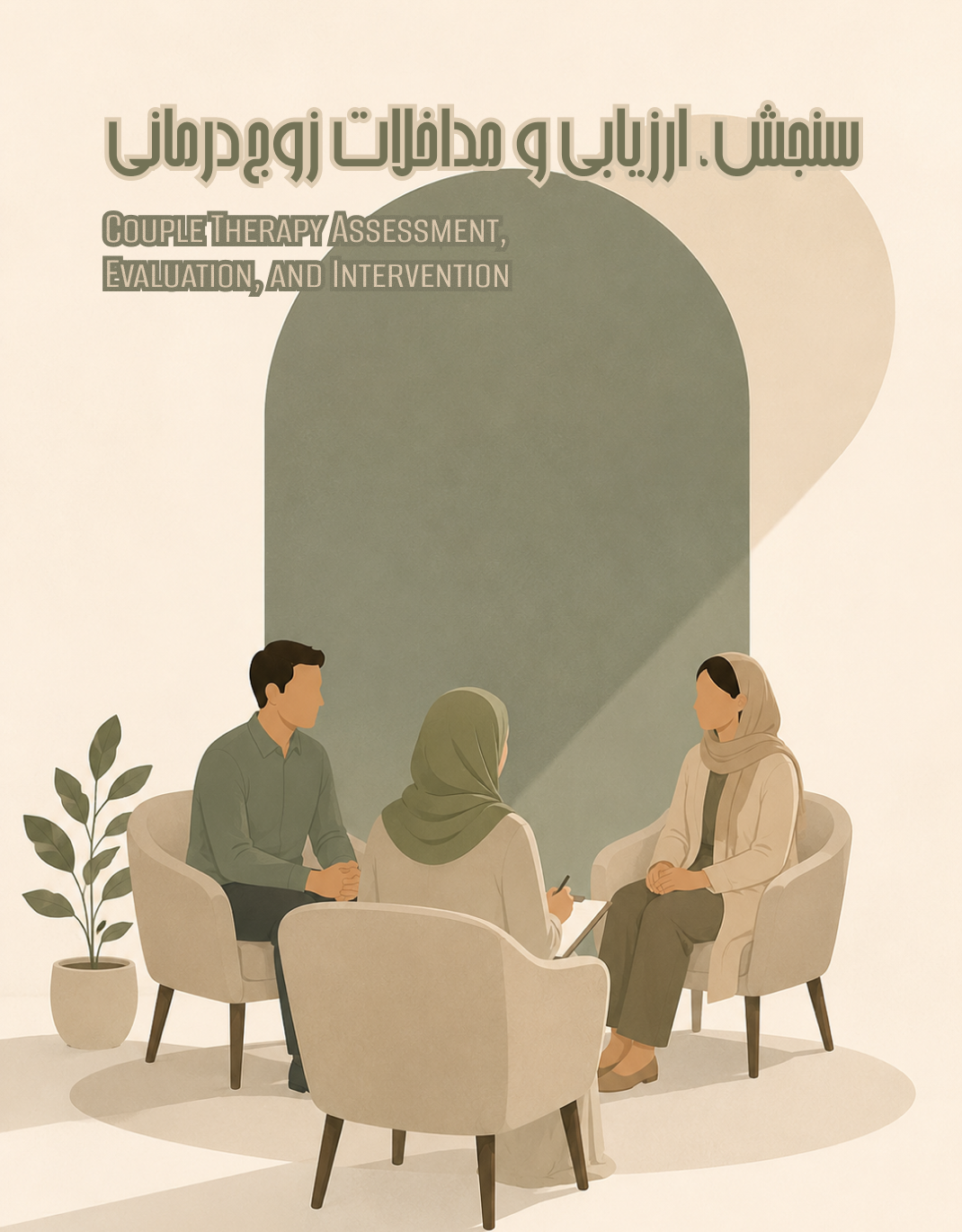
Comparing the Effectiveness of Paradoxical Couple Therapy and Affective Reconstructive Therapy on Interpersonal Mindfulness and Co-Rumination in Couples with Marital Conflict
Keywords:
Affective Reconstructive Therapy, Co-rumination, Conflicted Couples, Interpersonal Mindfulness, Paradoxical Couple TherapyAbstract
This study aimed to compare the effectiveness of paradoxical couple therapy and affective reconstructive therapy in improving interpersonal mindfulness and reducing co-rumination among couples experiencing marital conflict. This applied quasi-experimental study employed a pretest–posttest control-group design with a two-month follow-up. The statistical population comprised couples with marital conflict who attended family counseling centers in Mashhad, Iran, during 2024–2025. Fifteen couples, including 30 individuals, were selected through purposive sampling and randomly assigned to paradoxical couple therapy, affective reconstructive therapy, and control groups. The paradoxical couple therapy group received seven intervention sessions, whereas the affective reconstructive therapy group participated in eight sessions. The control group received no intervention during the study period. Data were collected using the Interpersonal Mindfulness Scale, Co-Rumination Questionnaire, and Marital Conflict Questionnaire. Repeated-measures analysis of variance with the Greenhouse–Geisser correction and Bonferroni post hoc comparisons was performed using SPSS version 25. The repeated-measures analysis revealed significant effects of time, group, and the time-by-group interaction on interpersonal mindfulness and co-rumination (p < .05). Bonferroni comparisons indicated that both paradoxical couple therapy and affective reconstructive therapy significantly increased interpersonal mindfulness and significantly reduced co-rumination compared with the control condition (p < .05). However, no statistically significant differences were found between the two intervention groups in their effects on either interpersonal mindfulness or co-rumination (p > .05). The therapeutic improvements observed following both interventions were maintained at the two-month follow-up assessment. Paradoxical couple therapy and affective reconstructive therapy appear to be effective and relatively durable interventions for enhancing interpersonal mindfulness and reducing co-rumination among couples with marital conflict. Because neither intervention demonstrated superior effectiveness, treatment selection may be guided by couples’ characteristics, therapists’ expertise, and available clinical resources. Nevertheless, the smaller number of sessions required for paradoxical couple therapy may make it a more time- and cost-efficient therapeutic option.
Downloads
References
Babaei, V., Abolmaali Alhosseini, K., & Habibi, M. B. (2023). Investigating the Effectiveness of Paradoxical Timetable Therapy on Anxiety Sensitivity and Focus of Attention in Individuals with Social Anxiety Disorder. Journal of Psychological Science, 22(125), 967-983.
Bakhshipour, B., Asadi, M., Kiani, A. R., ShirAlipour, A., & AhmadDoust, H. (2017). Relationship Between Family Performance and Marital Conflicts of Couples on the Verge of Divorce. Knowledge and research in applied psychology, 13(48), 10-19. https://www.sid.ir/paper/163666/fa
Besharat, M. A. (2018). Paradox Plus Timetable Equals Therapy: The Complete Model of Couple Therapy Using PTC; A Practical Guide. Roshd Publications.
Besharat, M. A. (2020). Assessing the Effectiveness of Paradoxical Couple Therapy on Couples' Problems: A Case Study. Biannual Journal of Family Psychology, 7(1), 1-18.
Besharat, M. A. (2023). Paradoxical Psychotherapy: A Practitioner's Guide. Springer International Publishing.
Chitgarzadeh, M. J., Asayesh, M. H., Besharat, M. A., & Hakkak, F. (2023). Effectiveness of Paradoxical Couple Therapy (PTC) on Marital Conflicts and Emotion Regulation in Maladjusted Couples. Rooyesh-e-Ravanshenasi, 12(2), 39-50.
Corey, G. (2024). Theory and Practice of Counseling and Psychotherapy. Arasbaran Publications.
Dias Martins, C., Vergara, R. C., & Khoury, B. (2025). A Machine Learning Approach for Investigating Variable Importance in Relationship and Sexual Satisfaction: The Role of Interpersonal Mindfulness and Psychological Safety. Journal of marital and family therapy, 51(2), e70026. https://doi.org/10.1111/jmft.70026
DiMarzio, K., Peisch, V., Acosta, J., Dale, C., Gutierrez, J., & Parent, J. (2022). Keeping Your Coparent in Mind: A Longitudinal Investigation of Mindfulness in the Family System. Family Process, 61(2), 808-822. https://doi.org/10.1111/famp.12702
Etesamipour, R., & Ramazanzadeh Moghadam, K. (2023). Effectiveness of Paradox Therapy on Anger Rumination in Individuals with Anxiety Caused by Coronavirus Disease. Clinical Psychology and Personality, 21(2), 105-116.
Gasbarrini, M. F., & Snyder, D. K. (2019). Affective Reconstructive Approach to Couple Therapy. In J. L. Lebow, A. L. Chambers, & D. C. Breunlin (Eds.), Encyclopedia of Couple and Family Therapy. Springer. https://doi.org/10.1007/978-3-319-49425-8_928
Gorjian Mahlabani, H., Sheikh Eslami, A., Kiani, A., & Rezaei Sharif, A. (2022). Effectiveness of Affective Reconstructive Couple Therapy on Cognitive Emotion Regulation in Women Affected by Infidelity. Behavioral Sciences Research, 20(3), 552-561.
Hosseini Gheidari, A., Goodarzi, M., Ahmadian, H., & Yarahmadi, Y. (2020). Presenting a Causal Model of Divorce Tendency Among Married Men Referred to Counseling Centers Based on Irrational Relationship Beliefs and Individual Differentiation with the Mediating Role of Sexual Function and Marital Disillusionment. Quarterly Journal of Psychological Sciences, 19(87), 361-374.
Khoury, B., Manova, V., Adel, L., Dumas, G., Lifshitz, M., Vergara, R. C., Sekhon, H., & Rej, S. (2023). Tri-Process Model of Interpersonal Mindfulness: Theoretical Framework and Study Protocol. Frontiers in psychology, 14, 1130959. https://doi.org/10.3389/fpsyg.2023.1130959
Li, X., Chen, Z., & Guo, C. (2026). The Longitudinal Relationship Between Co-Rumination and Depressive Symptoms in Adolescents: A Systematic Review and Meta-Analytic Structural Equation Modeling. Journal of affective disorders, 413, 122221. https://doi.org/10.1016/j.jad.2026.122221
Mera, S., Zimmer-Gembeck, M. J., & Conlon, E. (2025). Youth's Experience of Mindful Parenting: Associations with Dispositional and Interpersonal Mindfulness, Self-Compassion, and Ways of Coping with Academic and Social Stress. Journal of adolescence, 97(6), 1634-1644. https://doi.org/10.1002/jad.12524
Millstein, D. J., Orsillo, S. M., Hayes-Skelton, S. A., & Roemer, L. (2015). Interpersonal Problems, Mindfulness, and Therapy Outcome in an Acceptance-Based Behavior Therapy for Generalized Anxiety Disorder. Cognitive behaviour therapy, 44(6), 491-501. https://doi.org/10.1080/16506073.2015.1060255
Mohammadpour, M., Pourshams, S., Kalivand, M., Moradhasel, B., & Moradi, S. (2023). Psychometric Properties of the Persian Version of the Interpersonal Mindfulness Scale. Journal of Developmental Psychology, 20(77), 121-131.
Parkinson, L. (2023). Conciliation in Separation and Divorce: Finding Common Ground. Taylor & Francis.
Pratscher, S. D., Rose, A. J., Markovitz, L., & Bettencourt, A. (2018). Interpersonal Mindfulness: Investigating Mindfulness in Interpersonal Interactions, Co-Rumination and Friendship Quality. Mindfulness, 9(4), 1206-1215. https://psycnet.apa.org/record/2018-57650-001
Rajabi, G., Khoshnoud, G., Soudani, M., & Khojastehmehr, R. (2020). Effectiveness of Affective Reconstructive Couple Therapy in Increasing Trust and Marital Satisfaction in Remarried Couples. Iranian Journal of Psychiatry and Clinical Psychology, 26(1), 114-129.
Rehman, M., & Hossain, Z. (2024). Co-Rumination, Marital Satisfaction, and Depression: A Case of Married Men and Women in Pakistan. Journal of Comparative Family Studies, 54(4), 387-406. https://doi.org/10.33824/PJPR.2025.40.4.40
Rose, A. J., Schwartz-Mette, R. A., Glick, G. C., Smith, R. L., & Luebbe, A. M. (2014). An Observational Study of Co-Rumination in Adolescent Friendships. Developmental Psychology, 50(9), 2199-2209. https://doi.org/10.1037/a0037465
Saeedi Nejad, N., Forouzandeh, E., Besharat, M. A., Nikvarz, M., & Bani Taba, S. M. (2024). Effectiveness of Paradox Therapy on Anxiety and Ego Strength in Mothers with Premature Infants. Rooyesh-e-Ravanshenasi, 13(7), 61-70.
Saeedi Nejad, N., Forouzandeh, E., Besharat, M. A., Nikvarz, M., & Bani Taba, S. M. (2025). Effectiveness of Paradox Therapy on Depression and Ruminative Response in Mothers with Premature Infants. Quarterly Journal of Health Promotion Management, 14(1), 53-64.
Sanctuary, G. (2023). Marriage Under Stress: A Comparative Study of Marriage Conciliation. Taylor & Francis.
Seifi Ghuzlu, S. J., Sadri Demirchi, E., Rezaei Sharif, A., & Sheikh Eslami, A. (2000). Analysis of Psychological-Marital Problems in Women Seeking Divorce and Examination of the Effect of Affective Reconstructive Therapy on Them. Quarterly Journal of Applied Psychology, 17(2), 217-243.
Seifi Ghuzlu, S. J., Sadri Demirchi, E., Rezaei Sharif, A., & Sheikh Eslami, A. (2022). Comparing the Effects of Affective Reconstructive and Emotion-Focused Therapies on Forgiveness and Psychological Well-Being in Women Seeking Divorce with a History of Early Marriage. Biannual Journal of Family Psychology, 9(1), 45-59.
Seifi Ghuzlu, S. J., Sadri Demirchi, E., Rezaei Sharif, A., & Sheikh Eslami, A. (2024). Comparing the Effectiveness of Affective Reconstructive Therapy and Emotion-Focused Therapy on Marital Problems and Forgiveness in Women Seeking Divorce. Quarterly Journal of Applied Psychological Research, 15(1), 277-296.
Seyyed Aghaei, Z. S. P., & Karami, A. (2026). A Network Analysis of the Relationship Between Interpersonal Mindfulness, Emotion Regulation, and Emotional Divorce Among Iranian Couples. The American Journal of Family Therapy, 1-27. https://www.researchgate.net/publication/407259423_A_Network_Analysis_of_the_Relationship_Between_Interpersonal_Mindfulness_Emotion_Regulation_and_Emotional_Divorce_Among_Iranian_Couples
Snyder, D. K. (1999). Affective Reconstruction in the Context of a Pluralistic Approach to Couple Therapy. Clinical Psychology: Science and Practice, 6(4), 348. https://psycnet.apa.org/record/2000-13107-001
Snyder, D. K., & Mitchell, A. E. (2008). Affective-Reconstructive Couple Therapy: A Pluralistic, Developmental Approach. In A. S. Gurman (Ed.), Clinical Handbook of Couple Therapy (4th ed., pp. 353-382). The Guilford Press.
Voldstad, A., Zeas-Siguenza, A., Skolzkov, A., Walthaug, M., Montero-Marin, J., & Kuyken, W. (2025). The Effect of Mindfulness Interventions on Couple Relationship Satisfaction: A Systematic Review and Meta-Analysis. Journal of consulting and clinical psychology, 93(6), 427-442. https://doi.org/10.1037/ccp0000954
Zamani Zarchi, M. S., Samadi Kashani, S., & Ghasemzadeh, S. (2018). Comparison of Emotional Schemas and Self-Silencing in Women Seeking Divorce and Women Not Seeking Divorce. Biannual Journal of Police-Social Research, 6(2), 147-158.

Downloads
Published
Submitted
Revised
Accepted
Issue
Section
License
Copyright (c) 2025 Batool Saadat (Author); Mohammad Rajabi (Corresponding author); Alireza Rajaei (Author)

This work is licensed under a Creative Commons Attribution-NonCommercial 4.0 International License.