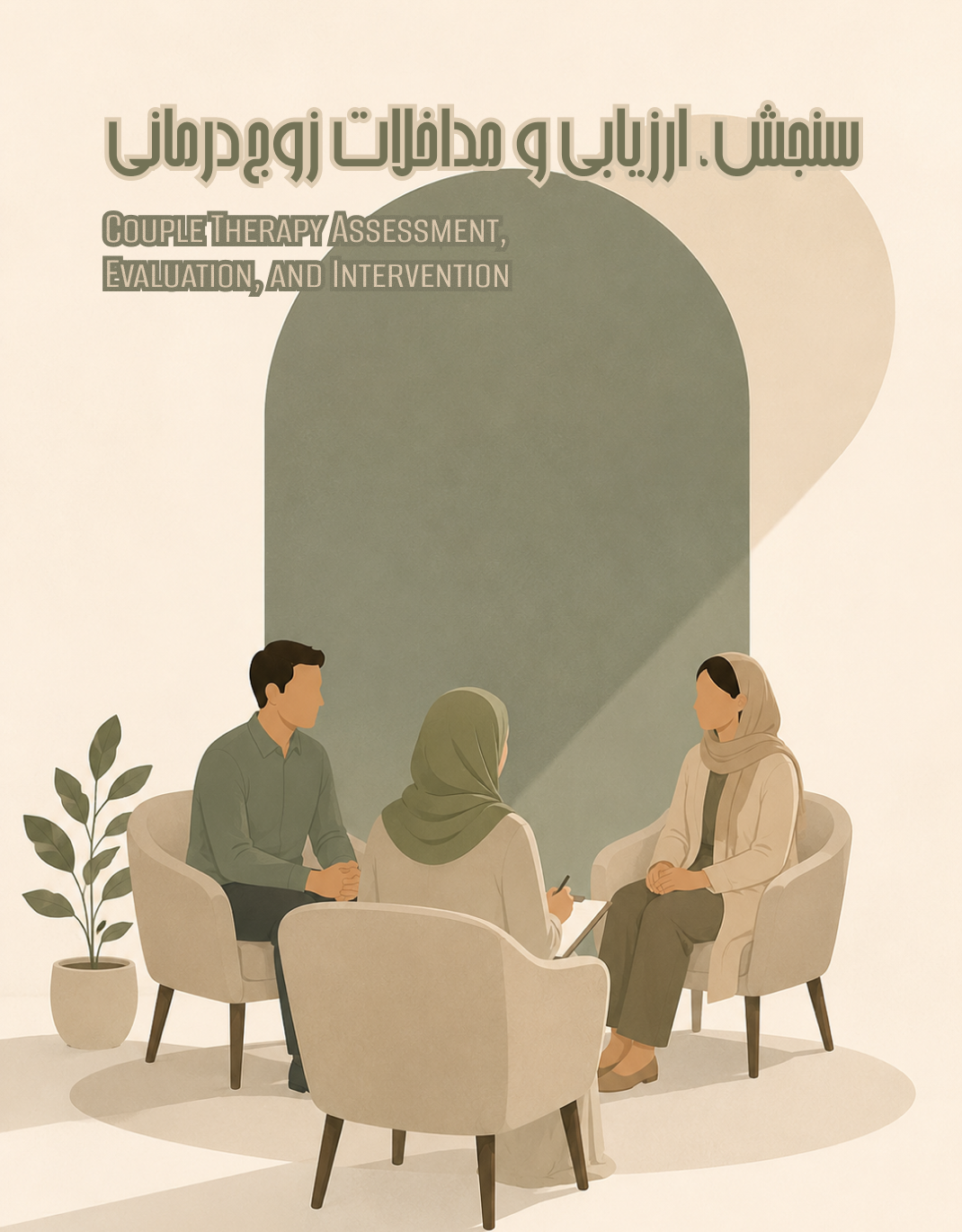
About the Journal
Couple Therapy Assessment, Evaluation, and Intervention (CTAEI) is an international, peer-reviewed, open-access scholarly journal dedicated to advancing scientific knowledge, clinical practice, and methodological innovation in the field of couple therapy and relationship-focused psychological interventions. The journal serves as a multidisciplinary platform for researchers, clinicians, educators, and policy-makers concerned with the assessment, evaluation, and treatment of relational processes, marital functioning, emotional bonds, communication patterns, conflict dynamics, attachment processes, and systemic interactional mechanisms within intimate partnerships.
The journal is committed to promoting high-quality, theory-driven and evidence-based scholarship that contributes meaningfully to the understanding and improvement of couple relationships across diverse cultural, social, and clinical contexts. By publishing original research articles, systematic reviews, meta-analyses, theoretical contributions, clinical case studies, methodological papers, and practice-oriented reports, the journal fosters the integration of research and practice in contemporary couple therapy.
CTAEI operates under a rigorous double-blind peer-review system, in which both authors and reviewers remain anonymous. Each manuscript is evaluated by two or three independent expert reviewers, ensuring methodological rigor, theoretical coherence, ethical integrity, and scholarly relevance. The journal maintains an efficient editorial workflow, with an average time from submission to final publication of approximately eight weeks, enabling rapid dissemination of high-quality research.
Aims and Scope
The primary aim of Couple Therapy Assessment, Evaluation, and Intervention is to promote scientific excellence and clinical innovation in the study and practice of couple and relationship therapy. The journal seeks to provide a comprehensive academic forum for the exploration of relational phenomena across the lifespan and within diverse sociocultural contexts.
The scope of the journal includes, but is not limited to, the following thematic areas:
-
Theoretical foundations of couple and marital therapy
-
Assessment and measurement of relationship functioning
-
Evaluation of therapeutic outcomes in couple interventions
-
Attachment, emotion regulation, and interpersonal processes
-
Communication patterns, conflict resolution, and power dynamics
-
Intimacy, trust, commitment, and relational satisfaction
-
Infidelity, betrayal trauma, and forgiveness processes
-
Divorce, separation, and relationship dissolution
-
Premarital counseling and relationship education
-
Culturally responsive couple therapy
-
Technology-assisted and online couple interventions
-
Integrative and systemic therapeutic models
-
Qualitative, quantitative, and mixed-methods research in relationship studies
-
Ethical issues and professional standards in couple therapy practice
-
Innovations in intervention design and therapeutic techniques
The journal welcomes contributions from psychology, counseling, psychiatry, social work, family therapy, behavioral sciences, and allied disciplines, emphasizing interdisciplinary collaboration and global perspectives.
Open Access Statement
Couple Therapy Assessment, Evaluation, and Intervention is a fully open-access journal, meaning that all published articles are freely and permanently accessible online to readers worldwide without any subscription or access fees. The journal strongly supports the principles of open science and equitable knowledge dissemination, enabling researchers, clinicians, students, and the public to benefit from current scientific advances without financial or institutional barriers.
All articles are immediately available upon publication and may be read, downloaded, shared, and used for educational and research purposes in accordance with the journal’s licensing policy.
Copyright and License
Authors publishing in CTAEI retain full copyright of their work. Upon acceptance and publication, articles are distributed under the Creative Commons Attribution–NonCommercial 4.0 International License (CC BY-NC 4.0).
This license permits others to copy, distribute, display, and adapt the work for non-commercial purposes, provided that appropriate credit is given to the original authors and source, a link to the license is provided, and any modifications are clearly indicated.
Authors are free to share their published work on personal websites, institutional repositories, and academic networks, consistent with the journal’s self-archiving policy.
Plagiarism Policy (iThenticate)
The journal maintains a strict zero-tolerance policy toward plagiarism, academic misconduct, and unethical publication practices. All submitted manuscripts are screened using iThenticate plagiarism detection software prior to peer review.
Manuscripts exhibiting plagiarism, excessive similarity, redundant publication, or unethical use of sources will be rejected immediately. The journal adheres to international standards of publication ethics and follows the guidelines of the Committee on Publication Ethics (COPE).
Article Processing Charges (APCs)
To support the costs associated with high-quality editorial management, peer review, digital archiving, and open-access publication, CTAEI charges an Article Processing Charge (APC) of 3,000,000 Tomans for each accepted manuscript.
The APC is payable only after the manuscript has been accepted for publication. There are no submission fees and no charges for rejected manuscripts. The APC ensures the sustainability of the journal’s open-access model and guarantees that published articles remain freely available to the global research community.
Peer-Review Process
All manuscripts submitted to CTAEI undergo a rigorous double-blind peer-review process. Neither authors nor reviewers are aware of each other’s identities throughout the evaluation.
Each manuscript is reviewed by two or three independent experts in the relevant field. Reviewers assess submissions based on originality, methodological quality, theoretical contribution, clarity of presentation, ethical compliance, and relevance to the journal’s aims and scope.
Based on the reviewers’ reports, the editorial board makes one of the following decisions:
accept, minor revision, major revision, or reject.
The journal strives for efficiency and transparency. The typical time from submission to final publication is approximately eight weeks, depending on the number of revision rounds required.
Archiving and Repository Policies
Couple Therapy Assessment, Evaluation, and Intervention ensures the long-term preservation and accessibility of its scholarly content through multiple archiving strategies.
All published articles are permanently stored on the journal’s official website. Authors are also encouraged to deposit the final published version of their articles in institutional repositories, personal websites, academic networking platforms, and non-commercial scholarly databases.
The journal supports self-archiving without embargo and promotes broad dissemination of research outputs in alignment with open-access best practices.