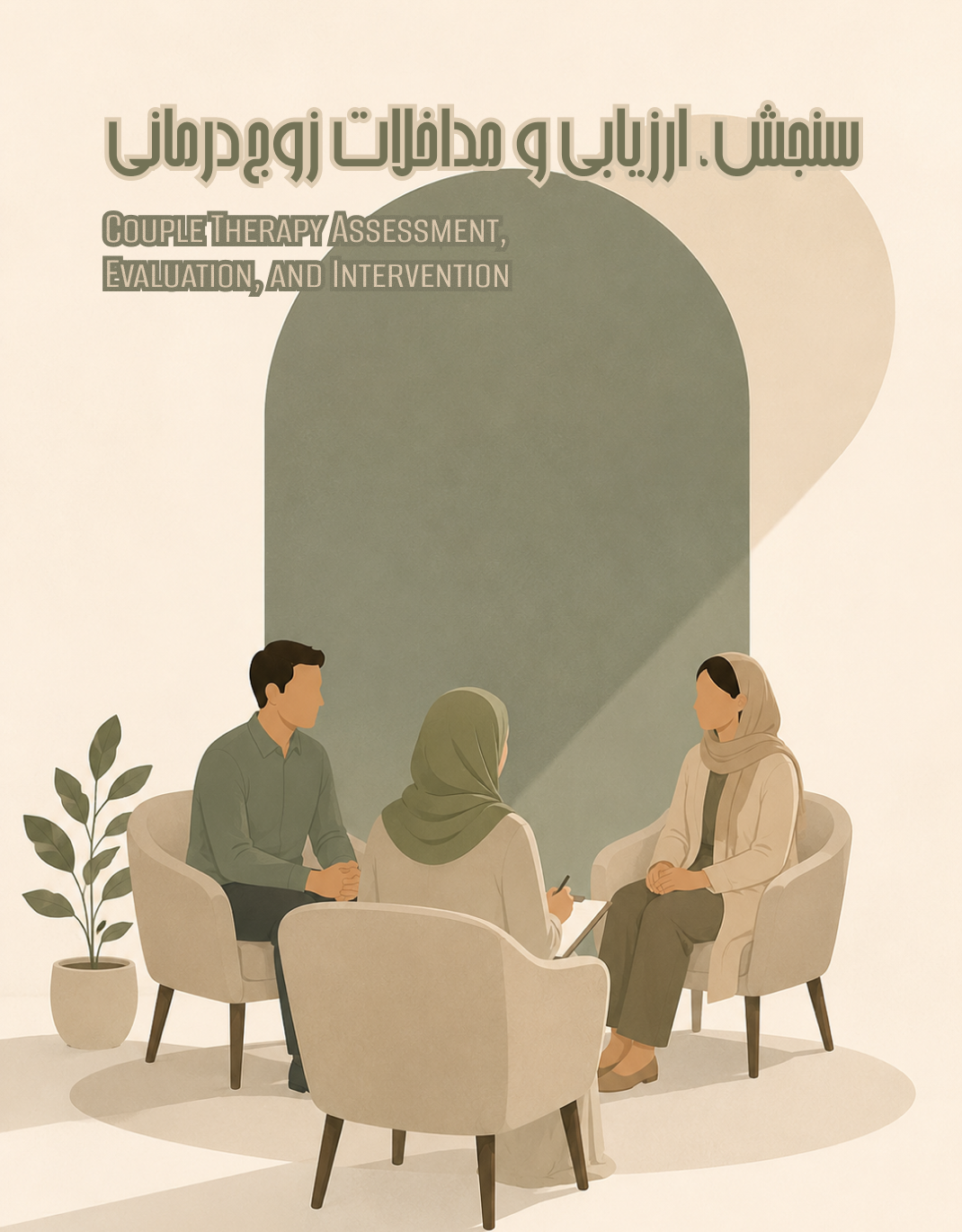
Explaining the Emotional Dynamics of Marital Conflicts within the Framework of Contemporary Therapeutic Models
Keywords:
Marital conflict, emotional dynamics, emotion regulation, couple therapy, attachment, emotional securityAbstract
This study aimed to explain the emotional mechanisms underlying marital conflicts within the framework of contemporary couple therapy models. This qualitative systematic review employed thematic analysis of 19 selected peer-reviewed articles. Data were collected through a targeted literature review and analyzed until theoretical saturation was achieved using NVivo 14. Open, axial, and selective coding procedures were applied. Results revealed three core categories: emotional regulation, emotional interaction patterns, and contemporary therapeutic interventions. Deficits in emotional awareness, cognitive emotion regulation, and empathy intensified conflicts, whereas effective emotional regulation enhanced emotional security and marital satisfaction. Emotion-focused, acceptance-based, and schema-based therapies were found to play critical roles in restructuring negative interaction cycles and strengthening emotional bonds. Marital conflict is fundamentally an emotional and interactive phenomenon, and effective intervention requires systematic focus on emotion regulation, attachment patterns, and emotional security within the relationship.
Downloads
References
Amato, P. R. (2010). Research on divorce: Continuing trends and new developments. Journal of Marriage and Family, 72(3), 650–666.
Bamelis, L. L. M., Evers, S. M. A. A., Spinhoven, P., & Arntz, A. (2014). Results of a multicenter randomized controlled trial of the clinical effectiveness of schema therapy for personality disorders. American Journal of Psychiatry, 171(3), 305–322.
Butler, E. A. (2011). Temporal interpersonal emotion systems. Emotion Review, 3(4), 367–377.
Carson, J. W., Carson, K. M., Gil, K. M., & Baucom, D. H. (2004). Mindfulness-based relationship enhancement. Behavior Therapy, 35(3), 471–494.
Christensen, A., & Heavey, C. L. (1990). Gender and social structure in the demand/withdraw pattern of marital conflict. Journal of Personality and Social Psychology, 59(1), 73–81.
Denton, W. H., et al. (2012). Emotionally focused couple therapy: The state of the art. Journal of Marital and Family Therapy, 38(3), 535–550.
Fincham, F. D., & Beach, S. R. H. (2010). Marriage in the new millennium. Journal of Family Theory & Review, 2(1), 2–16.
Gottman, J. M. (2014). What predicts divorce? New York: Routledge.
Gottman, J. M., & Silver, N. (2015). The seven principles for making marriage work. New York: Harmony Books.
Greenberg, L. S. (2011). Emotion-focused therapy. Washington, DC: APA.
Greenberg, L. S., & Goldman, R. (2008). Emotion-focused couples therapy. Washington, DC: APA.
Gross, J. J. (2015). Emotion regulation: Current status and future prospects. Psychological Inquiry, 26(1), 1–26.
Halford, W. K., Markman, H. J., & Stanley, S. M. (2008). Strengthening couples’ relationships. Journal of Family Psychology, 22(4), 497–505.
Halford, W. K., et al. (2013). Emotion regulation in couples. Journal of Family Psychology, 27(1), 1–11.
Hayes, S. C., Strosahl, K. D., & Wilson, K. G. (2012). Acceptance and commitment therapy. New York: Guilford Press.
Johnson, S. M. (2004). The practice of emotionally focused couple therapy. New York: Brunner-Routledge.
Johnson, S. M. (2019). Attachment theory in practice. New York: Guilford Press.
Kabat-Zinn, J. (2013). Full catastrophe living. New York: Bantam.
Karney, B. R., & Bradbury, T. N. (2020). Research on marital satisfaction. Journal of Marriage and Family, 82(1), 100–120.
Lebow, J. L., Chambers, A. L., Christensen, A., & Johnson, S. M. (2012). Research on the treatment of couple distress. Journal of Marital and Family Therapy, 38(1), 145–168.

Downloads
Published
Submitted
Revised
Accepted
Issue
Section
License

This work is licensed under a Creative Commons Attribution-NonCommercial 4.0 International License.