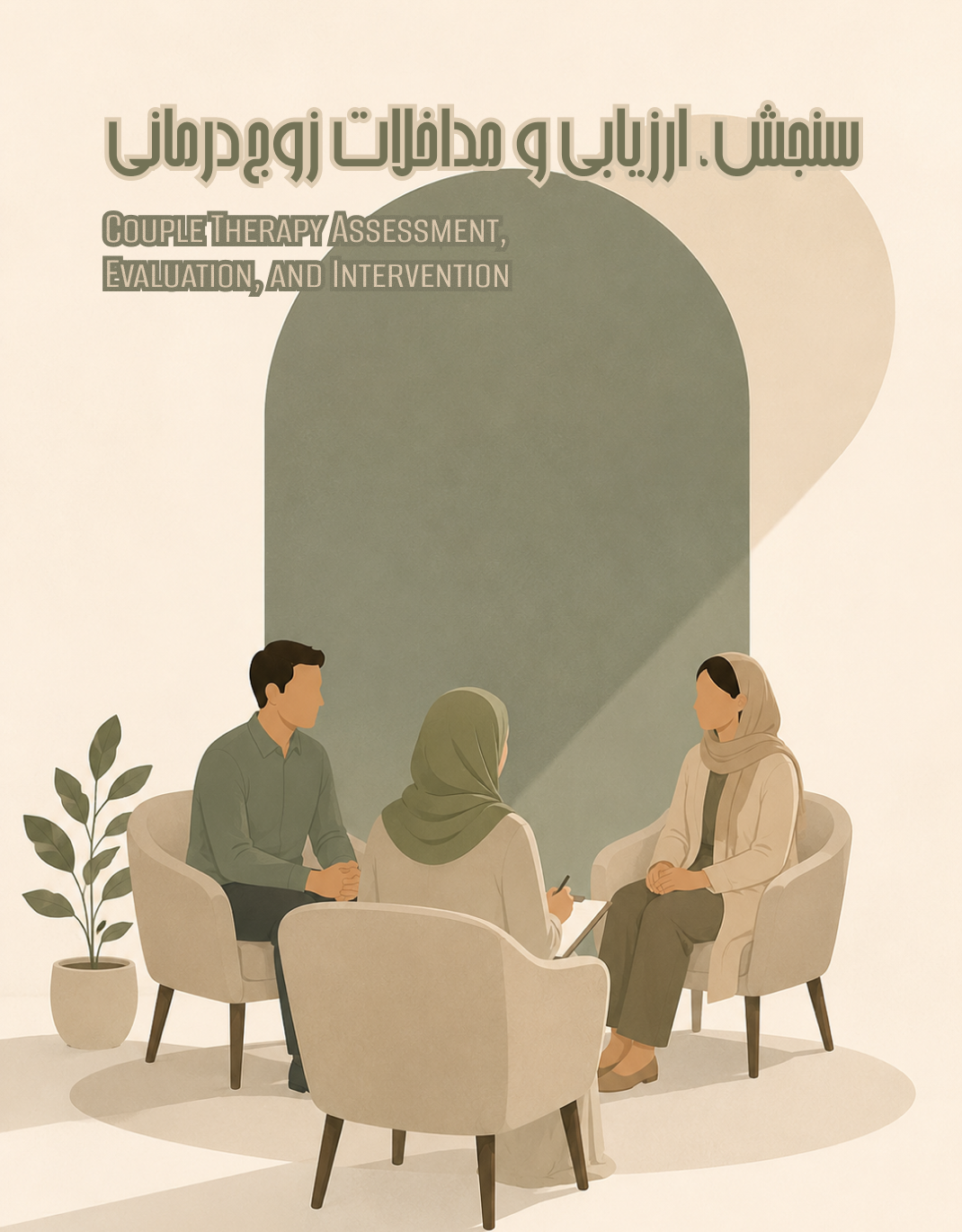
Effectiveness of Paradox Therapy on Alexithymia and Post-Traumatic Stress in Women Affected by Extramarital Relationships
Keywords:
Paradox Therapy, Alexithymia, Post-Traumatic Stress, Extramarital Relationships, WomenAbstract
This study aimed to determine the effectiveness of paradox therapy in reducing alexithymia and post-traumatic stress in women affected by extramarital relationships. This quasi-experimental study employed a pretest–posttest design with a control group and a two-month follow-up. The statistical population comprised women affected by extramarital relationships who attended psychology clinics affiliated with the Welfare Organization in Tehran from February to March 2025. Thirty eligible women were selected through purposive sampling and randomly assigned to an experimental group (n=15) and a control group (n=15). The experimental group received a six-session paradox therapy intervention based on Besharat’s protocol, whereas the control group received no intervention. Data were collected using the Toronto Alexithymia Scale, the post-traumatic stress questionnaire, and the Attitudes Toward Infidelity Scale. Data were analyzed in SPSS version 25 using repeated-measures analysis of variance and Bonferroni post-hoc comparisons. The time×group interaction was significant for alexithymia (F=52.189, p<0.001, η²=0.651) and post-traumatic stress (F=30.130, p<0.001, η²=0.518). In the experimental group, alexithymia significantly decreased from pretest to posttest (MD=16.400, p<0.001) and follow-up (MD=15.867, p<0.001). Post-traumatic stress also significantly decreased from pretest to posttest (MD=5.933, p<0.001) and follow-up (MD=5.467, p<0.001). Differences between posttest and follow-up were nonsignificant for alexithymia (p=1.000) and post-traumatic stress (p=0.740), indicating maintenance of treatment effects. No significant changes were observed across measurement stages in the control group. Paradox therapy appears to be an effective intervention with sustained effects for reducing alexithymia and post-traumatic stress symptoms among women affected by extramarital relationships. Accordingly, it may be considered a useful therapeutic approach in psychological and counseling services for women experiencing the psychological consequences of marital infidelity.
Downloads
References
Agboola, E. B., & Ojo, T. F. (2022). Marital Infidelity and Domestic Violence among Married Couples in Ekiti State, Nigeria. In Families in Nigeria: Understanding Their Diversity, Adaptability, and Strengths (pp. 123-135). Emerald Publishing Limited.
Babaei, V., Abu al-Maali al-Hosseini, K., & Habibi, M. B. (2023). Examining the Effectiveness of Paradoxical Timetable Therapy on Anxiety Sensitivity and Attentional Focus in Individuals with Social Anxiety Disorder. Journal of Psychological Science, 22(125), 967-983.
Bahadori, Z., Malihi al-Zakerini, S., Soodagar, S., Ansari Shahidi, M., & Shokregozar, A. (2026). Comparison of the Effectiveness of Paradox Therapy and Metacognitive Therapy on Psychological Distress and Emotion Regulation in Patients with Multiple Sclerosis. Iranian Journal of Nursing Research, 21(1), 1-12.
Besharat, M. A. (2023). Paradoxical Psychotherapy: A Practitioner's Guide. Springer.
Chitgarzadeh, M. J., Asayesh, M. H., Besharat, M. A., & Hakkak, F. (2023). The Effectiveness of Paradoxical Couple Therapy (PTC) on Marital Conflicts and Emotion Regulation in Distressed Couples. Rooyesh-e-Ravanshenasi Journal, 12(2), 39-50.
Doustmohammadi, F., Tavoli, A., & Khosravi, Z. (2022). Examining the Relationship between Object Relations Patterns and Somatization Symptoms with the Mediating Role of Alexithymia: A Model Based on Bion's Perspective. Journal of Rafsanjan University of Medical Sciences, 21(1), 71-90.
Ebrahimpour, M., Padiab, A., Ahmadi, S., & Sadeghi, M. (2022). Predicting Students' Susceptibility to Substance Addiction: The Role of Worry, Rumination, and Alexithymia. Advances in Cognitive Sciences, 24(1), 56-69.
Etesamipour, R., & Ramezanzadeh Moghadam, K. (2023). The Effectiveness of Paradox Therapy on Anger Rumination in Individuals with Anxiety Caused by COVID-19. Clinical Psychology and Personality, 21(2), 105-116.
Hashemizadeh, F. S., Atashpour, H., & Farhadi, H. (2024). Comparison of the Effectiveness of Paradoxical Timetable Therapy (PTC) and Emotion-Focused Therapy (EFT) on Family Adaptability and Emotional Self-Regulation in Women with Marital Conflict. Razi Journal of Medical Sciences, 31(1), 1-17.
Hosseinpour Kahvaz, S., Alavi, S. Z., & Shahbazi, M. (2026). The Effectiveness of Paradox Therapy on Emotional Expressivity and Self-Critical Rumination in Married Women with High Anxiety. Rooyesh-e-Ravanshenasi Journal, 15(2), 151-160.
Luo, H., Gong, X., Chen, X., Hu, J., Wang, X., Sun, Y., & Zhang, X. (2022). Exploring the Links between Alexithymia and Cognitive Emotion Regulation Strategies in Internet Addiction: A Network Analysis Model. Frontiers in psychology, 13, 938116.
Mahboubi, E., Shaker Dolagh, A., Khademi, A., & Asayesh, M. H. (2024). The Effect of Paradox Therapy on Body Image and Negative Emotions in Women with Body Dysmorphic Disorder. Iranian Journal of Nursing Research, 19(5), 72-82.
Masouri, F., & Bayat, F. (2023). The Effectiveness of Cognitive-Behavioral Therapy Based on Heimberg's Online Model on Anger Rumination and Alexithymia in 12-Year-Old Male Students with Depressive Symptoms. Rooyesh-e-Ravanshenasi Journal, 12(12), 149-158.
Najafi Dehaghani, J., Makvand Hosseini, S., & Mehrinejad, A. (2024). Comparison of the Effectiveness of Paradox Therapy and Cognitive-Behavioral Therapy on Internal Cohesion, Ego Strength, and Panic Disorder Symptoms. Clinical Psychology, 15(56), 17-34.
Nazari Fardouei, Z., Forouzandeh, E., & Bani Taba, S. M. (2022). The Effectiveness of Autobiographical Memory Specificity Training on Cognitive Abilities, Emotion Regulation, and Alexithymia in Depressed Adolescent Girls. Shefa Neuroscience Research Center Journal, 10(4), 62-70.
Nikan, A., Lotfi Kashani, F., Vaziri, S., & Mojtabaei, M. (2021). Comparison of Paradoxical Timetable Therapy and Cognitive-Behavioral Therapy on Defense Mechanisms and Symptoms in Individuals with Social Anxiety. Rooyesh-e-Ravanshenasi Journal, 10(4), 143-154.
Pei, J. H., Wang, X., Ma, T., Du, Y., & Dou, X. (2023). Alexithymia in a Chinese Patient with Chronic Pain and Associated Factors: A Cross-Sectional Study. Pain Management Nursing, 24(4), e1-e6.
Peymanpak, F., Pourshahriari, M., & Abdollahi, A. (2023). Comparison of the Effectiveness of Paradoxical Timetable Therapy and Cognitive-Behavioral Therapy in Reducing Symptoms of Women with Generalized Anxiety Disorder. Woman and family studies, 16(59), 47-63.
Preece, D. A., Mehta, A., Petrova, K., Sikka, P., Bjureberg, J., Becerra, R., & Gross, J. J. (2023). Alexithymia and Emotion Regulation. Journal of affective disorders, 324, 232-238.
Rafizadeh, B., Besharat, M. A., & Farahani, H. (2026). The Effectiveness of Paradox Therapy in Increasing Mental Health and Ego Strength in Patients with Type 1 and Type 2 Diabetes. Applied Psychological Research, 17(2), 17-30.
Saeidinejad, N., Forouzandeh, E., Besharat, M. A., Nikvarz, M., & Bani Taba, S. M. (2024). The Effectiveness of Paradox Therapy on Anxiety and Ego Strength in Mothers of Premature Infants. Rooyesh-e-Ravanshenasi Journal, 13(7), 61-70.
Song, X., & Nadarajah, S. (2022). New Models for the Extramarital Affairs Data. Applied Economics, 54(11), 1243-1256.
Taghilou, L., Azizi Ziabari, L. S., Khajavand Khoshli, A., & Damghani Mirmahaleh, M. (2023). Comparison of the Effectiveness of Acceptance and Commitment Therapy (ACT) and Paradox Therapy (PTC) on Ego Strength in Nurses. Nurse and Physician Within War, 11(38), 12-19.
Tahernejad Jozam, Z., Besharat, M. A., Belyad, M. R., Hossein Zadeh Taghvaei, M., & Peyvandi, P. (2022). Assessment and Comparison of the Effectiveness of Paradox Therapy and Reality Therapy on Ego Strength and Integrative Self-Knowledge in Women Aged 20 to 40 with Spinal Cord Injury. Journal of Disability Studies, 12(1), 214-220.
Vahidnia, N., Ahmadi Noudeh, K., Mardani Rad, M., & Farrokhi, N. (2022). A Model for Preventing Marital Infidelity from the Perspective of the Quran. Islamic Studies of Women and Family, 9(16), 145-162.
Weiser, D. A., Shrout, M. R., Thomas, A. V., Edwards, A. L., & Pickens, J. C. (2023). “I’ve Been Cheated, Been Mistreated, When Will I Be Loved”: Two Decades of Infidelity Research through an Intersectional Lens. Journal of Social and Personal Relationships, 40(3), 856-898.
Wróblewska-Skrzek, J. (2021). Infidelity in Relation to Sex and Gender: The Perspective of Sociobiology versus the Perspective of Sociology of Emotions. Sexuality & Culture, 25(5), 1885-1894.
Zakeri, F., & Rezaei, M. (2022). The Role of Alexithymia and Dysfunctional Reactions in Predicting Marital Intimacy. Practice in Clinical Psychology, 10(4), 329-342.
Downloads
Publication Timeline
- Submitted
- Revised
- Accepted
Issue
Section
License
Copyright (c) 2025 Maryam Bagheri (Author); Davood Taghvaei (Corresponding author); Parvin Fatahibayat, Mazaher Bodaghi (Author)

This work is licensed under a Creative Commons Attribution-NonCommercial 4.0 International License.