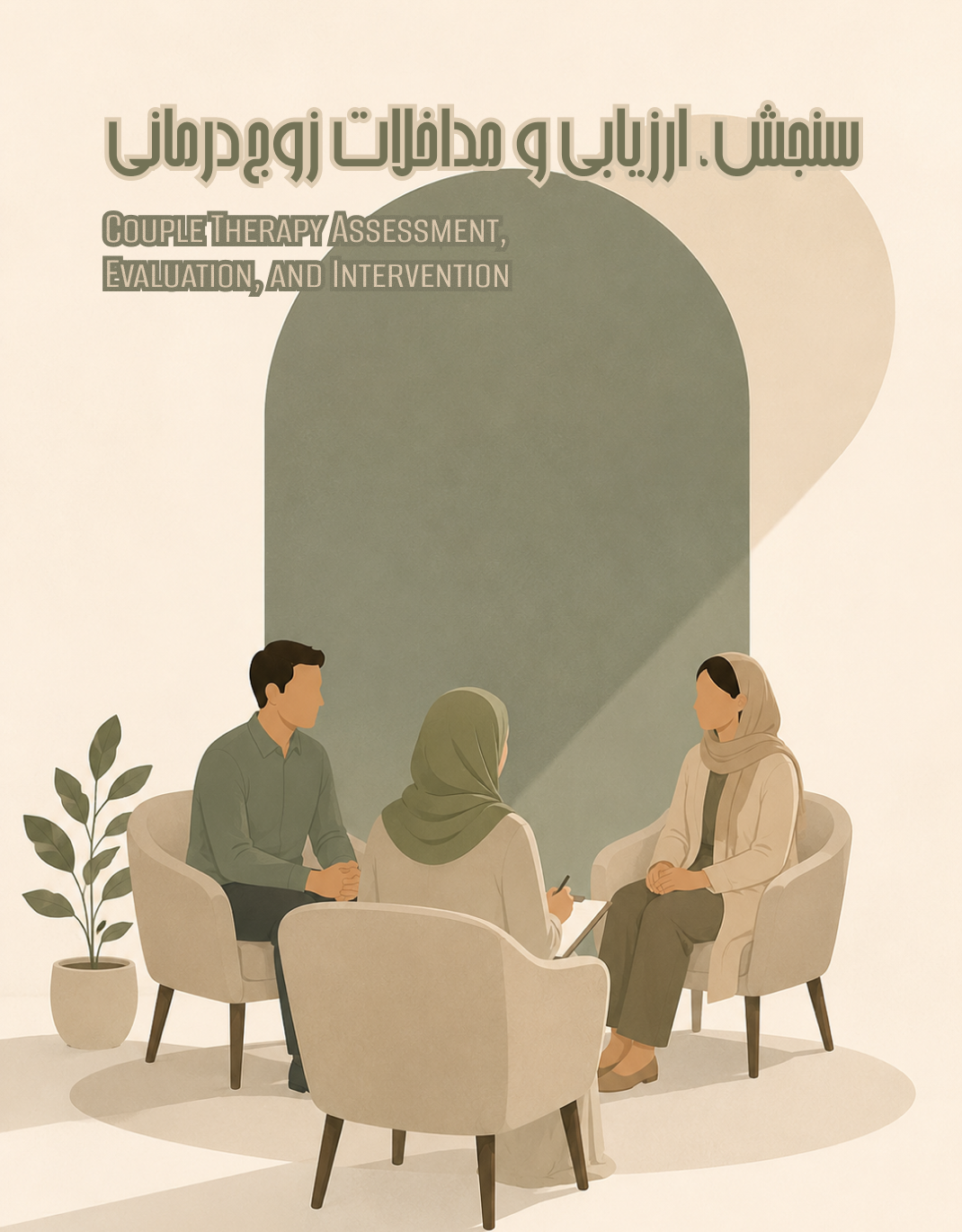
Uncovering Hidden Mechanisms of Emotional Burnout in Long-Term Marriages: A Qualitative Study Using Thematic Analysis
Keywords:
Emotional burnout, Long-term marriage, Thematic analysis, Marital intimacy, Emotional silence, Couple therapyAbstract
This study aimed to uncover the hidden mechanisms of emotional burnout in long-term marriages and to explain the processes through which intimacy, emotional responsiveness, and relational vitality gradually decline among married individuals in Tehran. This qualitative study was conducted using thematic analysis. The participants were 24 married individuals from Tehran, including 12 women and 12 men, all of whom had been married for at least 15 years and reported experiences of emotional exhaustion, relational distance, or psychological fatigue within their marital relationship. Participants were selected through purposive sampling according to predefined inclusion criteria. Data were collected through in-depth semi-structured interviews. Interviews continued until theoretical saturation was achieved; saturation emerged after the twentieth interview, and four additional interviews were conducted to confirm and enrich the themes. All interviews were audio-recorded with participants’ consent, transcribed verbatim, and analyzed using NVivo software based on Braun and Clarke’s six-phase thematic analysis framework. The analysis yielded five main themes: gradual erosion of emotional reciprocity, sedimentation of unresolved emotional injuries, functional coexistence without intimacy, learned emotional silence, and reduction of the emotional self within the relationship. The findings indicated that emotional burnout in long-term marriages is usually not the result of a single dramatic crisis. Rather, it emerges through the accumulation of small but repeated relational failures, including diminished attention, lack of empathic response, avoidance of deep conversations, weak conflict repair, and chronic experiences of not being emotionally seen. Emotional burnout in long-term marriages should be understood as a gradual, multilayered, and relational process in which partners become distant not necessarily because of a lack of commitment, but because of depleted emotional resources, impaired conflict repair, and normalized emotional disengagement. Couple therapy interventions for this population should focus on rebuilding emotional responsiveness, restorative dialogue, recognition of neglected needs, and renewed shared intimacy.
Downloads
References
Bodenmann, G. (2005). Dyadic coping and its significance for marital functioning. In T. A. Revenson, K. Kayser, & G. Bodenmann (Eds.), Couples coping with stress: Emerging perspectives on dyadic coping (pp. 33–49). American Psychological Association.
Braun, V., & Clarke, V. (2006). Using thematic analysis in psychology. Qualitative Research in Psychology, 3(2), 77–101. https://doi.org/10.1191/1478088706qp063oa
Fincham, F. D., & Beach, S. R. H. (2010). Marriage in the new millennium: A decade in review. Journal of Marriage and Family, 72(3), 630–649. https://doi.org/10.1111/j.1741-3737.2010.00722.x
Gottman, J. M., & Levenson, R. W. (2000). The timing of divorce: Predicting when a couple will divorce over a 14-year period. Journal of Marriage and Family, 62(3), 737–745. https://doi.org/10.1111/j.1741-3737.2000.00737.x
Guest, G., Bunce, A., & Johnson, L. (2006). How many interviews are enough? An experiment with data saturation and variability. Field Methods, 18(1), 59–82. https://doi.org/10.1177/1525822X05279903
Hobfoll, S. E. (1989). Conservation of resources: A new attempt at conceptualizing stress. American Psychologist, 44(3), 513–524. https://doi.org/10.1037/0003-066X.44.3.513
Johnson, S. M. (2004). The practice of emotionally focused couple therapy: Creating connection (2nd ed.). Brunner-Routledge.
Karney, B. R., & Bradbury, T. N. (1995). The longitudinal course of marital quality and stability: A review of theory, method, and research. Psychological Bulletin, 118(1), 3–34. https://doi.org/10.1037/0033-2909.118.1.3
Downloads
Publication Timeline
- Submitted
- Revised
- Accepted
Issue
Section
License

This work is licensed under a Creative Commons Attribution-NonCommercial 4.0 International License.